
Modern Mudras: Part 4 Prana Mudra (The Gesture of Vital Life Energy)
Dana Lloyd | MAR 1, 2026
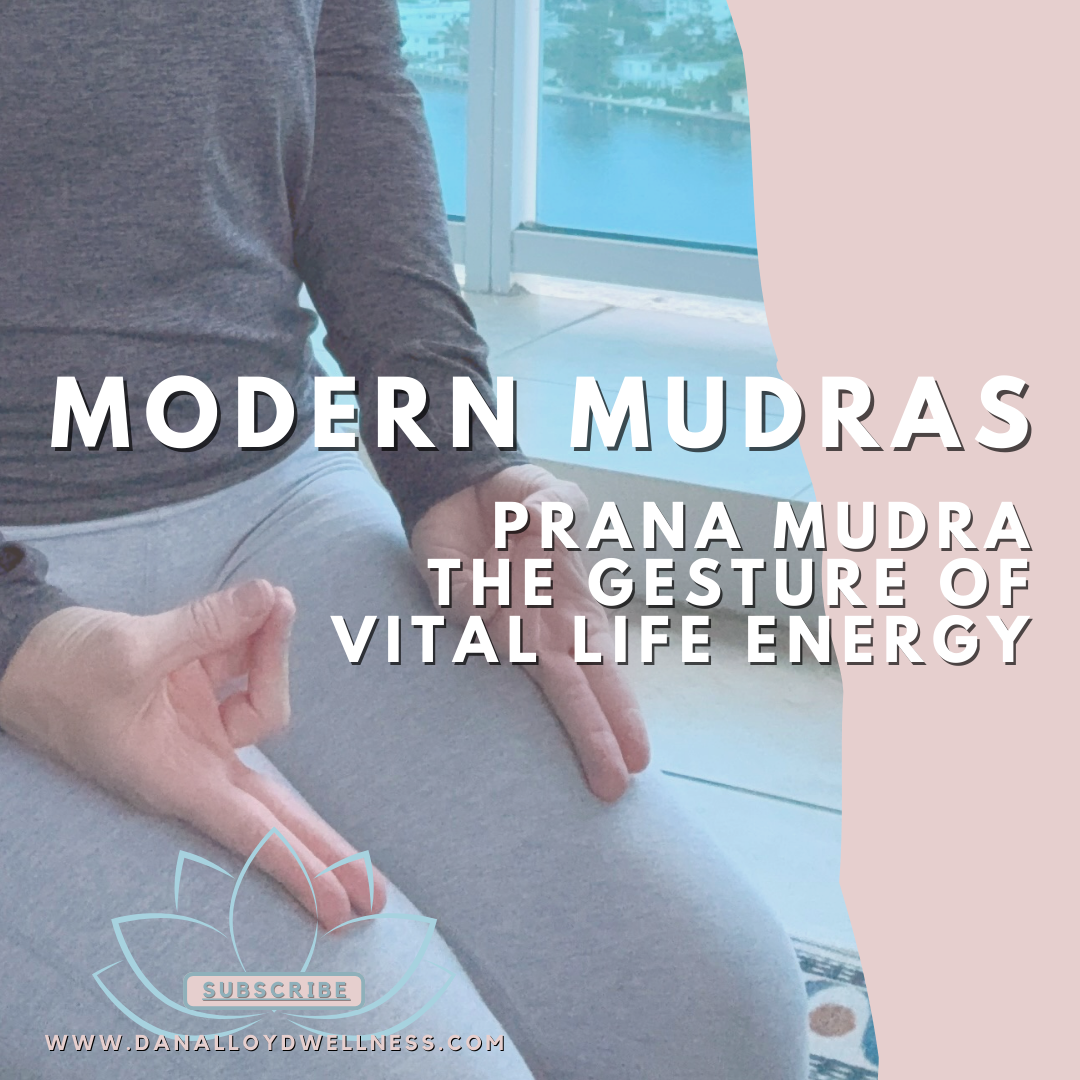
(Part 4: Modern Mudras)
Modern Mudras: Prana Mudra (The Gesture of Vital Life Energy)
Prana Mudra
Prana Mudra is a gesture all about waking things up gently. Energy, focus, and that spark that sometimes starts to dim without notice. A few fingers touch, a few stay long and boom that's it.
Prana Mudra is often described as a gesture for vitality, but that description only scratches the surface. This mudra supports the movement of life force energy in the body. It helps awaken awareness, steadiness, and subtle strength without creating effort or stimulation. Prana Mudra is the mudra I reach for when I want to feel more alive without having to try harder or just "pushing through."
In modern practice, Prana Mudra gives us a quiet return to aliveness.

Sanskrit & Symbolism
The word Prana refers to life force, vital energy, and the subtle intelligence that animates our bodies.
In Prana Mudra, the thumb represents universal consciousness, while the ring and little fingers symbolize the earth and water elements. When these fingers meet, they symbolically form an energetic circuit that supports nourishment, stability, and vitality.
The extended index and middle fingers allow energy to remain open and unobstructed, creating a gesture that balances receptivity with alert presence. Prana Mudra is symbolic of remembering that energy does not need to be forced. It responds to awareness.
How to Practice Prana Mudra
Prana Mudra can be practiced seated, standing, or lying down.
Bring the thumb, ring finger, and little finger together.
Extend the index and middle fingers comfortably.
Rest the hands on the thighs or alongside the body.
Allow the breath to move naturally. There is no need to control or deepen it. Simply observe the sensation of energy settling and circulating.
Practice for 5–15 minutes, or as long as feels supportive.
Prana Mudra is traditionally used to awaken dormant energy and restore balance in the system. Rather than trying to energize yourself, simply notice the subtle feeling of steadiness and vitality.
Energetic & Anatomical Associations of Prana Mudra
Prana Mudra is primarily associated with the life force energy that sustains the body and mind. The thumb represents universal consciousness. The ring and little fingers are associated with the earth and water elements. Together, they create a circuit that supports vitality, grounding, and internal nourishment.
Energetically, it supports:
Vitality and resilience
Grounded alertness
Balanced energy flow
A sense of inner replenishment
Chakra Connection: Root Chakra (Muladhara) and Heart Chakra (Anahata).
Many practitioners find this mudra to be deeply stabilizing and notice a feeling of steadiness, warmth, or subtle clarity while holding this mudra, especially during meditation or breathwork. This makes Prana Mudra especially supportive when the body feels tired, scattered, or disconnected from its natural rhythm.
Benefits of Practicing Prana Mudra
With consistent practice, Prana Mudra may support:
Increased vitality and stamina
Improved concentration and presence
A grounded sense of energy
Emotional steadiness
Nervous system regulation
It is often practiced during meditation, pranayama, or moments of rest when the body needs gentle support rather than stimulation.
Affirmation for Prana Mudra
My energy is steady, supported, and naturally renewed.
Journal Prompts
Where in my life am I already supported by steady energy, even when I am not consciously noticing it?
What shifts when I allow vitality to arise naturally rather than trying to generate it?
Closing Reflection
Prana Mudra reminds us that vitality does not come from effort. It comes from connection. When we allow energy to circulate without interference, the body remembers how to sustain itself. This gesture offers a quiet invitation to return to that innate wisdom.
Preview of the Next Mudra
Looking to the next part of this series, we move from renewal to refinement. We’ll shift our focus inward toward the heart with Hridaya Mudra, a gesture associated with emotional balance, inner clarity, and heart-centered awareness. Where Prana Mudra restores vitality and life force, Hridaya Mudra asks us to listen more deeply to what the heart already knows.
Let's Stay Connected
🪷 Subscribe to my newsletter for the full Modern Mudra exploration.
🪷 Watch the companion practice on YouTube.
🪷 Save this post on Pinterest for your practice.
Until next time breathe deep, stay present, bye for now! 🙏✌️👌🤌🫶
Dana Lloyd
ERYT200 | RYT500 | CMT500 | YACEP |
Yoga | Meditation | Breath | Sound |
Dana Lloyd | MAR 1, 2026
Share this blog post