
Modern Mudras: Part 1 Anjali Mudra (The Gesture of Reverence)
Dana Lloyd | DEC 1, 2025
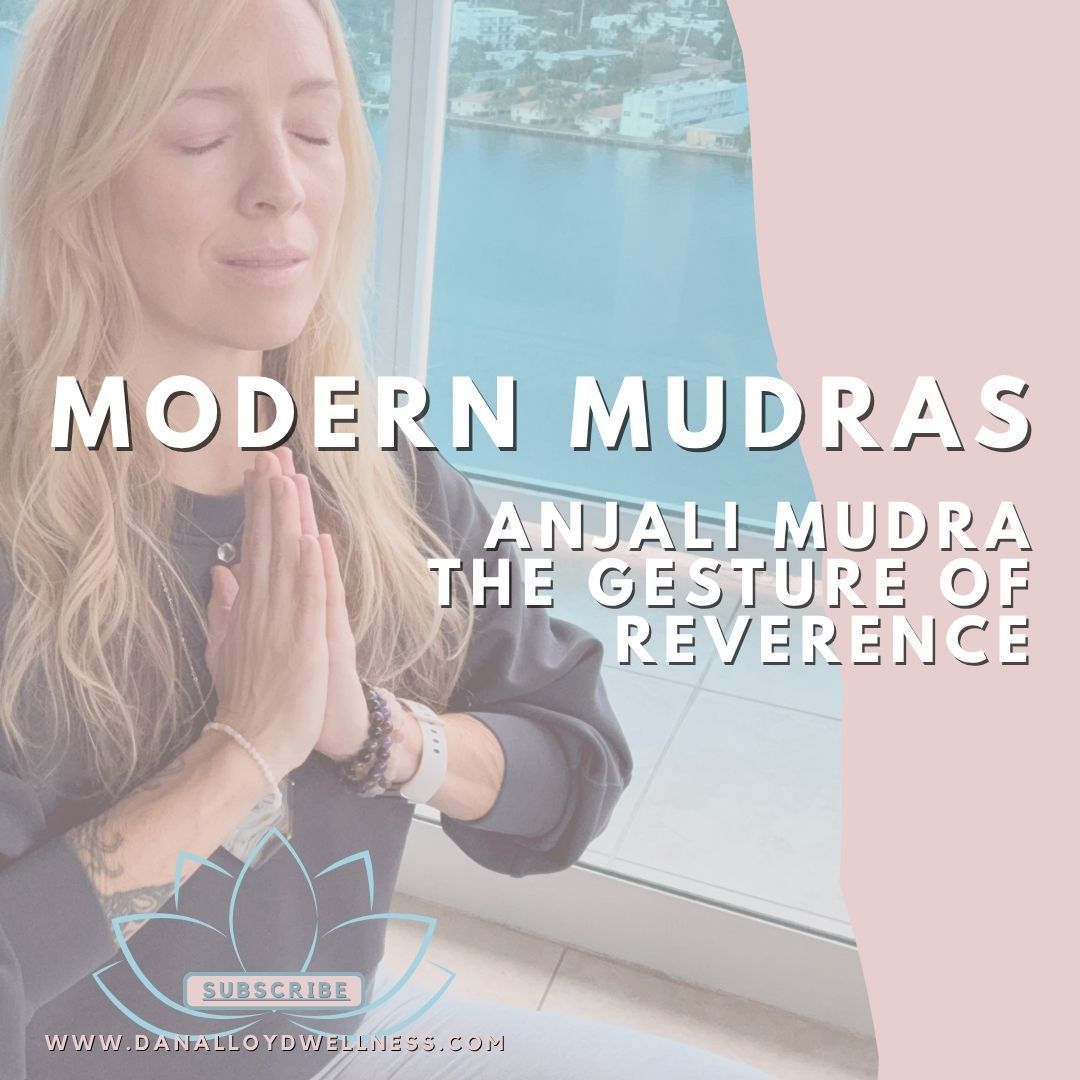
(Part 1: Modern Mudras)
Modern Mudras: Anjali Mudra (The Gesture of Reverence)
When our palms and fingertips meet at the heart, something quiet but profound happens (stay with me here-good shit ahead). The breath slows, the shoulders soften, and the mind quiets. This is our own personal freakin' magical moment! So let's get into it!

The Sanskrit & Symbolism
Anjali means “offering” or “salutation.”
Mudra means "seal" or "gesture."
This mudra symbolizes balance, gratitude, and the meeting of dualities: left and right, self and other, human and divine, (for me reactive and calm is one of my dualities...and since I'm a Libra that balance is critical-AF). Anjali Mudra is most often used as a gesture of respect or greeting, as in the traditional Namaste, meaning “the light in me honors the light in you.” This popular mudra also helps to snap you back to the present moment, to your center, to your heart space, giving you the pause needed to get your shit together and align your mind/body connection.
How to Practice
Sit or stand tall with your spine elongated (ahem...are you hunching?) Align your ears over your shoulders, your shoulders over your hips, your feet about hips width apart. No, this isn't the Hokey Pokey lol.
Bring your palms and fingertips together, pressing gently (we aren't squeezing the life out of our hands) at the center of your chest.
Thumbs rest lightly against the sternum, connecting the hands to the heart.
Soften your gaze or gently close your eyes.
Breathe naturally, feeling the rhythm of your breath and heartbeat beneath your thumbs. Allow the muscles in the face to soften (smooth out those wrinkles babes). Let the shoulders drop away from your ears. Stay for several breaths, noticing the subtle shift in your energy.
Energetic & Anatomical Associations
Chakra: Heart (Anahata) where you can focus awareness to open the heart to love and compassion (sooo needed these days)
Element: Air (movement, connection, compassion)
Balance: Symbolically unites the left and right sides of the mind and body; harmonizes inner and outer awareness and intuition.
Benefits
Practicing Anjali Mudra may help:
Promote inner calm and emotional balance (who couldn't use more of that?)
Encourage gratitude and humility (we should always make time for thank yous right??)
Center awareness at the heart space, focus the mind, and find your chill
Create a mindful pause during transitions in your day.
For me, it gives me something to focus on other than how many more breaths are left in a pose during class, because sometimes that feels like a torturous for-ev-errrrrrrrrrr).
Affirmations & Reflections
I am connected to my heart.
I honor the divine within and around me.
I honor the light within myself and others.
Journal Prompts:
When do I feel most connected to my heart? How can I carry that connection into my daily life, work, family, commute etc?
Where in my life do I need to soften into gratitude?
Next Month: Gyan Mudra (The Gesture of Wisdom)
As we move forward, we’ll explore Gyan Mudra. A gesture that is traditionally associated with awakening clarity and insight, inviting the mind to open like a lotus.
Let's Stay Connected
🪷 Subscribe to my newsletter for the full Modern Mudra exploration.
🪷 Watch the companion practice on YouTube.
🪷 Save this post on Pinterest for your practice.
Until next time breathe deep, stay present, bye for now! 🙏✌️👌🤌🫶
Dana Lloyd
ERYT200 | RYT500 | CMT500 | YACEP |
Yoga | Meditation | Breath | Sound |
Dana Lloyd | DEC 1, 2025
Share this blog post